Description
- Description
- Features
- About The Brand
-
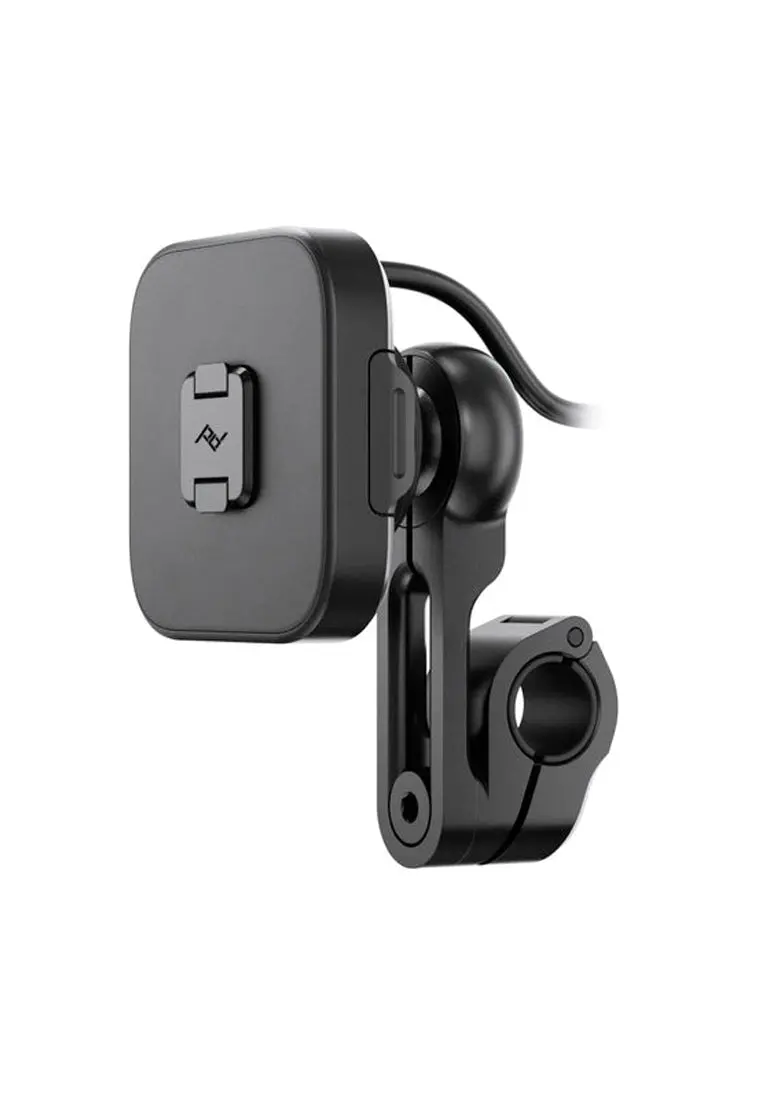
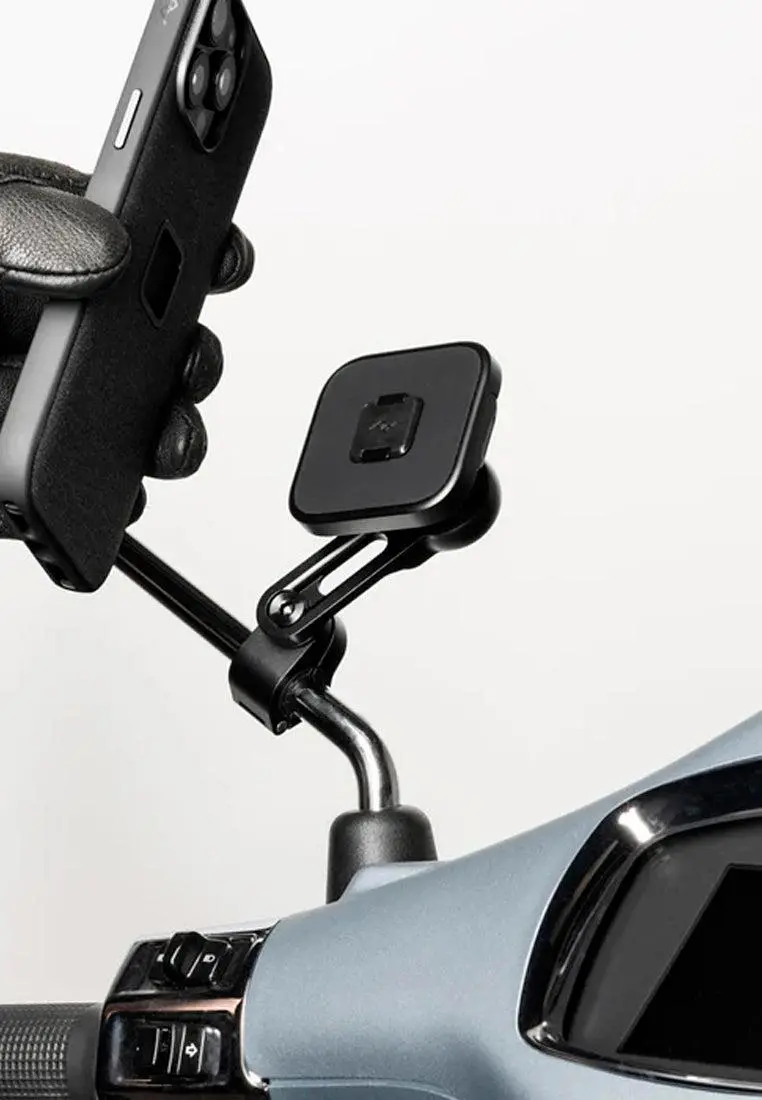
Designed to mount your phone on scooter mirror stems or motorcycle accessory rails, the Motorcycle Mirror Mount keeps your phone rigidly secure, instantly accessible, perfectly viewable, and fully charged with industry-leading Qi2 wireless charging. Securely installs on a wide variety of mirror stems, navigation crossbars, and accessory rails from 10mm to 16mm in diameter. Features an ultra-strong magnetic/mechanical mounting technology (called SlimLink™) that grabs, locks, and charges your phone so effortlessly, it feels like magic. Remove your phone instantly with the press of a button—even with riding gloves on. A rigid adjustment arm with fully articulating ballhead lets you customize your phone position for optimized viewing. Remove the arm for lower-profile mounting. Best-in-class vibration isolator prevents phone damage, yet preserves enough stiffness so you can easily interact with your phone while mounted. Weatherproof machined and anodized aluminum construction with stainless steel fasteners.
Requires a?Peak Design Case?orUniversal Adapter?(sold separately). Qi2 charging version comes with a waterproof USB-C cable that requires a USB-C power source.
USB-A and SAE (direct-to-battery) cables sold separately.
-
Dimensions
Charging Mount Head: 5.8cm x 5.8cm x 1.65cm (2.28″ x 2.28″ x 0.65″)
Arm length (tip to tip): 9.9cm (3.9″)
Arm width: 1.8cm (0.7″)
Arm height: 0.6cm (0.24″)
Bar Diameter Compatibility
10mm (0.39″)
12mm (0.47″)
14mm (0.55″)
16mm (0.63″)
Weight
Charging: 160g
What’s In The Box
(1) Motorcycle Mirror Mount Charging
(3) Sizing Collar Sets: 10mm, 12mm, 14mm (fits 16mm with no collar)
(1) 4mm hex wrench
(2) Cable ties
(1) USB-C Cable
-
In 2010, a fresh-faced, Minnesota-born, good-to-know-ya fella named Peter Dering went on a 4-month trip around the world. During this trip he learned that carrying a DSLR camera is a pain in the touchis. He returned to his San Francisco apartment and did what any responsible person would do: quit his nice job and spent 10 months designing a little thingy-dingy for carrying cameras. In May 2011 Peter launched that thingy-dingy (we now call it Capture) on a fledgling website called Kickstarter. It worked, and Peak Design was born. Peter started hiring friends, friends of friends, and random people he met at concerts. Peak Design got itself a little office in San Francisco’s Dogpatch neighborhood.
Explore more from our collection.



Reviews
There are no reviews yet.